
How Brain Evolution Influences Emotion and Decision-Making
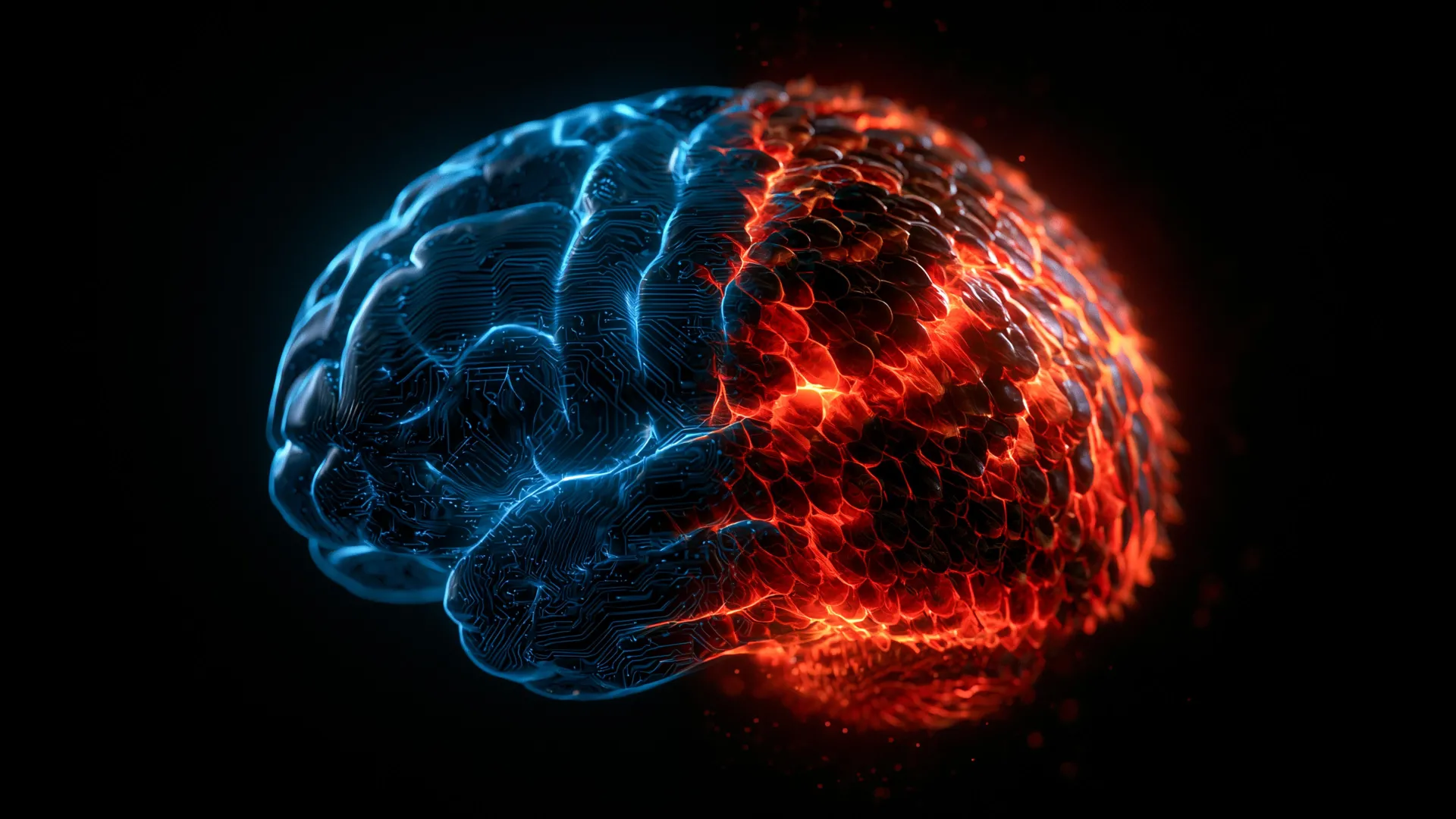
Researchers have uncovered new insights into how the human brain evolved, challenging the traditional view that it developed in layers, with newer regions stacked on older ones. Instead, a study published in Science Advances suggests that brain evolution is more about how different regions are wired together. By analyzing both biological brains and artificial neural networks, researchers found that the brain's wiring strategies compete for limited space, leading to a balance between different systems even before birth.
This discovery is significant for anyone interested in understanding how our brains work and how they influence our emotions and decision-making. For example, the study highlights that the limbic system, often associated with emotions, and the neocortex, linked to reasoning, do not evolve independently. Instead, they seem to expand and contract together, suggesting a coordinated relationship that could impact how we process emotions and make choices throughout our lives.
The research, which involved examining brain structures across 182 species, indicates that brain evolution is driven by the need for survival in specific environments. For instance, animals that rely heavily on smell have larger limbic systems, while those that depend on vision have more developed neocortexes. This evolutionary trade-off may explain why different species have such varied brain structures.
Moreover, these findings could inform the development of artificial intelligence. By mimicking the brain's natural wiring, engineers might create AI systems that learn more efficiently and require less data and energy. This work opens up exciting possibilities for both neuroscience and technology, illustrating the interconnectedness of biological evolution and artificial intelligence.
References
This article is a plain-English summary of the reporting below. Full figures, methodology and caveats are in the original.